The Snows of Kilimanjaro PDF: A Comprehensive Guide (Updated May 5, 2026)
This guide explores accessing “The Snows of Kilimanjaro” in PDF format, covering legitimate sources, copyright concerns, and analyzing various editions available online today.
“The Snows of Kilimanjaro,” a poignant short story by Ernest Hemingway, delves into themes of mortality, regret, and the enduring power of storytelling. Finding a reliable PDF version allows readers convenient access to this classic. However, navigating digital copies requires awareness of copyright and source legitimacy.
This story, published in 1936, continues to resonate with audiences, prompting critical analysis and inspiring adaptations, including a notable 1952 film.
Ernest Hemingway: Author Background
Ernest Hemingway (1899-1961) was a pivotal figure in 20th-century literature, renowned for his concise and impactful writing style. His experiences as a journalist and ambulance driver during WWI profoundly shaped his work.
Accessing “The Snows of Kilimanjaro” in PDF format offers a window into Hemingway’s mastery. He received the Nobel Prize in Literature in 1954, solidifying his legacy as a literary icon.
Hemingway’s Life and Influences
Hemingway’s adventurous life – including time in Africa and wartime experiences – heavily influenced his writing. His travels provided rich settings, like those found in “The Snows of Kilimanjaro,” readily available as a PDF download.
Exposure to modernist writers and a fascination with courage under pressure shaped his minimalist style. These elements are crucial when studying the story in its digital form.
Hemingway’s Writing Style: Iceberg Theory
Hemingway’s “Iceberg Theory” emphasizes brevity and subtext; much meaning lies beneath the surface. When reading “The Snows of Kilimanjaro” as a PDF, this requires careful attention to dialogue and symbolism.
He omits explicit explanations, forcing readers to actively interpret the narrative. This style is powerfully present in the story’s exploration of mortality, readily accessible in digital editions.
Plot Summary of “The Snows of Kilimanjaro”
“The Snows of Kilimanjaro” follows Harry Morgan, a writer, as he awaits death from gangrene during a safari in Africa. A PDF version allows easy access to this poignant tale of regret and lost ambitions.
Through feverish recollections, Harry confronts his past failures while his wife, Helen, desperately seeks rescue. The story unfolds through fragmented memories and dialogue, readily available in digital format.
The Dying Harry: Initial Situation
Harry Morgan is critically ill, suffering from gangrene in his leg, while on safari in the African wilderness. A PDF copy of the story vividly portrays his deteriorating condition and the immediate crisis.
Stranded at a remote camp, Harry and his wife, Helen, await a rescue plane that may arrive too late. The story’s tension is heightened, easily experienced through a downloadable PDF version.
The Journey and the Leopard Hunt
Harry’s recollections intertwine with his present suffering, frequently revisiting a past leopard hunt – a symbol of his lost courage and ambition. A PDF of the story allows close examination of these interwoven timelines.
The failed hunt represents a pivotal moment, highlighting Harry’s decline. Accessing a digital PDF provides a convenient way to analyze the narrative’s structure and symbolic weight of this crucial event.
Key Characters and Their Significance
Understanding Harry and Helen Morgan is crucial to interpreting Hemingway’s story. A readily available PDF version facilitates detailed character analysis, noting dialogue and internal monologues.
The characters’ dynamics reveal themes of regret and disillusionment. Studying the text within a PDF allows for easy annotation and comparison of their interactions, deepening comprehension of their significance.

Harry Morgan: The Protagonist
Harry Morgan, a writer facing mortality, dominates “The Snows of Kilimanjaro.” A PDF copy enables close reading of his internal struggles and recollections, revealing a complex character.
Analyzing his dialogue and memories within the PDF highlights themes of lost potential and artistic failure. The PDF format supports detailed textual examination of his deteriorating condition and philosophical reflections.
Helen Morgan: Harry’s Wife
Helen Morgan, Harry’s wife, is a crucial figure in “The Snows of Kilimanjaro.” A readily available PDF version allows for focused study of her role as caregiver and companion during his final days.
Examining the text within the PDF reveals her pragmatic nature and the strain placed upon their relationship. The PDF facilitates tracing her reactions to Harry’s decline and his often-bitter reflections.

Themes Explored in the Story
A “Snows of Kilimanjaro” PDF enables detailed exploration of its profound themes. PDF access allows focused analysis of mortality, regret, and the power of memory, central to Hemingway’s narrative.
Studying the PDF reveals how these themes intertwine, particularly through Harry’s recollections; The PDF format supports close reading to understand the story’s commentary on life, death, and unfulfilled potential.
Mortality and Facing Death
A “Snows of Kilimanjaro” PDF facilitates a focused study of mortality. PDF access allows readers to dissect Harry’s acceptance – or resistance – to his impending death, a core theme.
Analyzing the PDF reveals Hemingway’s stark portrayal of physical decay and the psychological impact of facing finality. The PDF format aids in tracing Harry’s shifting perspectives as death draws near, offering a poignant exploration of human vulnerability.
Regret and Lost Opportunities
A “Snows of Kilimanjaro” PDF enables close examination of Harry’s profound regrets. PDF versions allow detailed analysis of his unfulfilled ambitions and the life he didn’t live, surfacing through flashbacks.
Studying the PDF highlights Hemingway’s exploration of wasted potential and the sting of unrealized dreams. The PDF format supports tracing the narrative’s focus on Harry’s perceived failures, prompting reflection on the choices that define a life.
The Power of Memory and Storytelling
A “Snows of Kilimanjaro” PDF facilitates a deep dive into how Hemingway portrays memory as both solace and torment. PDF access allows readers to meticulously track the fragmented recollections shaping Harry’s final moments.
Analyzing the PDF reveals storytelling as a desperate attempt to impose order on a chaotic past. The PDF format aids in understanding how narratives, both real and imagined, become crucial for confronting mortality and finding meaning.
Symbolism in “The Snows of Kilimanjaro”
A “Snows of Kilimanjaro” PDF enables close reading to decipher Hemingway’s rich symbolism. PDF versions allow focused analysis of Kilimanjaro itself, representing unattainable ideals and spiritual purity, contrasted with Harry’s decaying state.
Examining the PDF reveals the leopard as a symbol of Harry’s lost courage and unfulfilled ambitions. PDF access aids in tracing these symbolic threads, deepening understanding of the story’s complex layers and thematic resonance.
Kilimanjaro as a Symbol
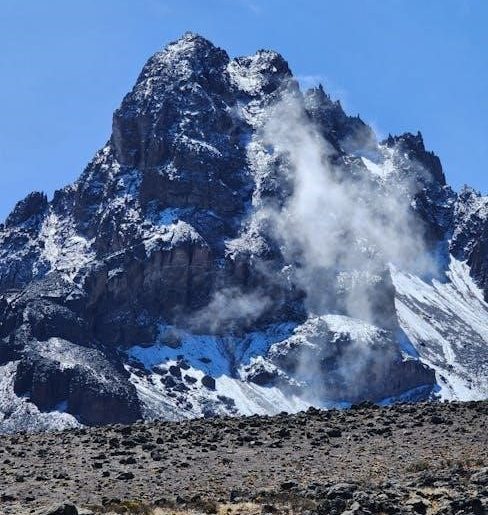
A digital “Snows of Kilimanjaro” PDF facilitates detailed study of the mountain’s symbolism. Kilimanjaro, with its snow-capped peak, embodies enduring purity and unattainable grace, sharply contrasting Harry’s physical and spiritual decline.
PDF access allows readers to analyze how Hemingway uses the mountain to represent Harry’s lost potential and the fading of youthful idealism. The PDF highlights Kilimanjaro as a beacon of hope, forever out of reach.
The Leopard as a Symbol
Analyzing a “Snows of Kilimanjaro” PDF reveals the leopard’s potent symbolism. The leopard represents Harry’s unfulfilled ambition – a grand, elusive prize he failed to capture in life, mirroring his unrealized writing potential.
Through the PDF, readers can trace how the leopard haunts Harry’s dying thoughts, embodying regret and the consequences of inaction. The PDF underscores the leopard as a symbol of lost power and masculine ideals.

Finding and Accessing “The Snows of Kilimanjaro” PDF Versions
Locating a “Snows of Kilimanjaro” PDF requires careful navigation. Reputable online libraries and academic databases often offer legally accessible versions. Project Gutenberg and similar platforms are excellent starting points for free, public domain PDFs.
However, be cautious; unauthorized downloads pose copyright risks. Always verify the source before downloading a PDF to ensure legality and avoid potential malware.
Legitimate Sources for PDF Downloads

Several reliable sources provide legal access to “The Snows of Kilimanjaro” in PDF format. University libraries with digital collections are excellent resources, often requiring only a library card for access. Google Scholar can lead to academic PDFs.
Additionally, consider authorized ebook retailers like Amazon Kindle or Barnes & Noble Nook, which frequently offer PDF options. Beware of websites promising free downloads from questionable origins.
Potential Risks of Unofficial PDF Sources (Copyright Issues)
Downloading PDFs from unofficial sources carries significant risks, primarily concerning copyright infringement. Such sites often distribute materials illegally, violating the author’s and publisher’s rights. Users risk legal repercussions, including fines, for possessing or distributing copyrighted content unlawfully.
Furthermore, these sites frequently harbor malware and viruses, compromising your device’s security. Prioritize legitimate sources to protect yourself legally and digitally.
Analyzing Different PDF Editions and Translations
When comparing PDF editions, note variations stemming from original publication dates and subsequent revisions. First editions may contain unique textual nuances absent in later versions. If translations exist, carefully assess their fidelity to Hemingway’s original prose and stylistic choices.
Consider how different translators interpret key passages, impacting the story’s overall meaning and emotional resonance. Authenticity is paramount when studying literary works.
First Edition PDF vs. Later Editions
A first edition PDF offers a glimpse into Hemingway’s original intent, potentially revealing subtle differences in wording or punctuation absent in revised editions. Later PDFs may benefit from corrected errors or updated formatting, enhancing readability.

However, these changes could also subtly alter the author’s voice. Scholars often prefer first editions for critical analysis, while general readers might favor clarity.
Comparing Translations (if applicable)
While “The Snows of Kilimanjaro” is primarily available in English, PDF versions of translations may exist. Comparing these reveals how different languages interpret Hemingway’s style and themes.
Nuances in word choice and sentence structure can significantly impact the story’s emotional resonance. Analyzing these variations offers insight into both the text and the translation process itself, enriching understanding.
Critical Reception and Literary Analysis
Initial reviews of “The Snows of Kilimanjaro” were mixed, with some critics praising Hemingway’s stark prose and others finding the story bleak and emotionally detached. PDF versions facilitate access to these historical critiques.
Modern analysis often focuses on the story’s exploration of mortality, regret, and the power of storytelling; Scholarly articles, often found accompanying PDF editions, provide deeper contextual understanding.
Initial Reviews and Contemporary Criticism
Contemporary critics, upon the story’s 1936 publication, debated its autobiographical elements and Hemingway’s portrayal of a failing writer. PDF archives of period journals reveal these early reactions.
Some reviewers found the narrative self-indulgent, while others lauded its psychological depth. Digitized reviews within PDF collections offer a valuable glimpse into the story’s initial reception and evolving interpretations.
Modern Interpretations of the Story
Contemporary scholarship, accessible through PDF databases, often analyzes “The Snows of Kilimanjaro” through postcolonial and psychoanalytic lenses. Digital archives reveal evolving perspectives on themes of masculinity and artistic failure.
PDF versions of academic essays explore the story’s complex symbolism and Hemingway’s stylistic innovations. Modern critics frequently debate the narrative’s ambiguity and its enduring relevance in the 21st century.
“The Snows of Kilimanjaro” and its Adaptations (Film)
PDF resources detailing film adaptations often highlight the 1952 Gregory Peck version. Online analyses, frequently found in PDF format, compare the screenplay to Hemingway’s original story, noting significant alterations to plot and characterization.
Scholarly PDFs explore how the film adaptation interprets the story’s themes, and the impact of visual medium. Digital libraries offer access to reviews and critical essays on the film’s legacy.
The 1952 Film Adaptation: Overview
PDF synopses of the 1952 film, readily available online, detail its narrative divergences from Hemingway’s short story. Digital film studies, often in PDF form, analyze the casting choices and directorial style.
Critical analyses in PDF format discuss the film’s romanticized portrayal versus the story’s stark realism. Online resources provide access to the screenplay, allowing for direct comparison with the original text, often as a downloadable PDF.
Differences Between the Story and the Film
PDF comparisons highlight the film’s expanded backstory for Harry and Helen, absent in Hemingway’s concise narrative. Scholarly PDFs detail how the film softens the story’s bleakness, adding a romantic subplot.

Online analyses in PDF format explore the film’s altered ending, offering a sense of closure Hemingway deliberately avoids. Downloadable PDFs of script analyses reveal omitted dialogues and thematic shifts, impacting character motivations.
Hemingway’s Use of Setting and Atmosphere

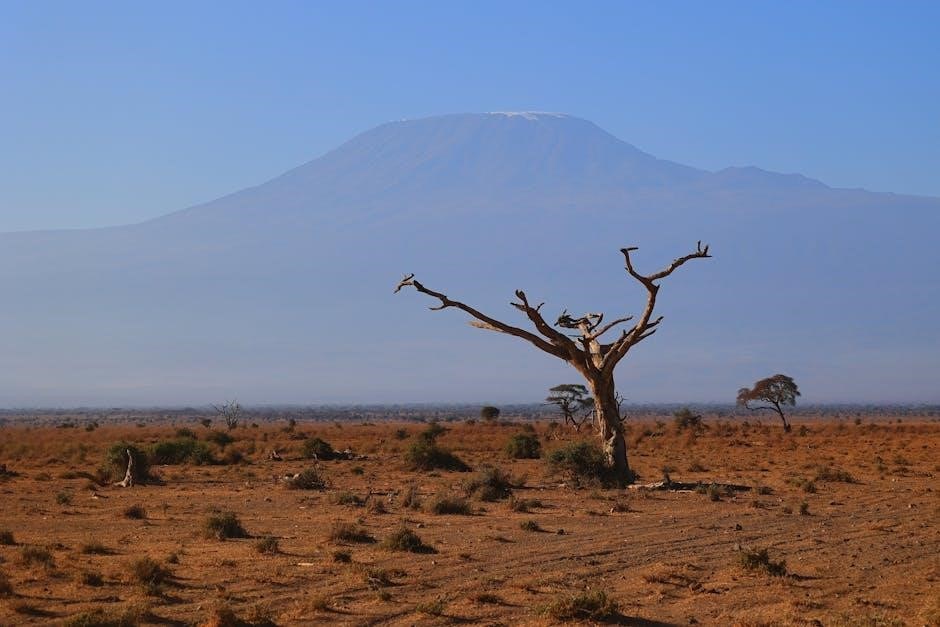
PDF studies demonstrate how Hemingway utilizes the African landscape to mirror Harry’s internal decay, a key element often discussed in digital PDF analyses. Accessible PDFs reveal the setting isn’t merely backdrop, but a symbol of lost vitality.
Downloadable PDFs of critical essays highlight the oppressive heat and vastness, intensifying Harry’s sense of isolation, a theme prominent in online PDF resources.
The African Landscape and its Impact
PDF versions reveal the stark contrast between Kilimanjaro’s majestic snows and the decaying surroundings, mirroring Harry’s life. Digital PDF copies emphasize how the landscape embodies both beauty and death, fueling his regret.
Accessible PDFs show the African wilderness as indifferent to human suffering, amplifying Harry’s isolation. Online PDF analyses detail how this setting profoundly impacts the story’s themes, readily available for study.
The Story’s Narrative Structure and Point of View
PDF analyses highlight Hemingway’s fragmented, stream-of-consciousness style, mirroring Harry’s fading mind. Digital PDF editions showcase the shifting between present illness and past memories, creating a non-linear narrative.
Accessible PDFs reveal a third-person limited perspective, focusing on Harry’s internal struggles. Online PDF resources demonstrate how this structure enhances the story’s emotional impact, readily available for detailed examination.
Common Discussion Questions and Study Guides
PDF study guides frequently pose questions about Harry’s motivations and regrets, prompting deeper analysis. Downloadable PDFs often include prompts on symbolism – Kilimanjaro and the leopard – fostering critical thinking.
Accessible PDF resources explore themes of mortality and the impact of lost opportunities. Online PDF versions facilitate classroom discussions, examining Hemingway’s style and narrative choices, enhancing comprehension.
Copyright Information and Fair Use Considerations for the PDF
Downloading a “Snows of Kilimanjaro” PDF from unauthorized sources may violate copyright law. Public domain status varies by country; ensure compliance before distribution.
Fair use allows limited PDF excerpts for educational purposes, like study guides or critical analysis. PDF copies obtained legally support Hemingway’s estate and promote literary preservation. Always verify the source’s legitimacy.
Resources for Further Reading and Research
Explore Hemingway’s works through the Hemingway Society website for scholarly articles and biographical information. JSTOR and Project MUSE offer academic analyses of “The Snows of Kilimanjaro.”
Online literary journals frequently publish essays on Hemingway’s short stories. University library databases provide access to critical editions and research materials related to the PDF and its themes.